
(As mentioned a while back: posting has been light this summer as I whip my my observations into a book, and as I cut my last links with Texas for a permanent relocation to Mississippi and otherwise adjust to the dislocations resulting from the ongoing “freedom march” of the American empire.
The scare-quoted title references a scurrilous piece of drivel written by a general officer of the U.S. Army during the Mass Desecration Event of 2020. This miscreant, an undistinguished rat-faced non-entity, sought a pat on the head from the Epstein Class and, we might presume, an invitation to a certain island and bucketloads of fiatskis, by “courageously denouncing” his ancestors. It’s my sincere hope he gets exactly what he deserves.
Soon there will be bits from the second chapter, the subject of which is the social order created by our ancestors and destroyed as an offense to Western civilization by Lincoln and the Republicans. It will include a discussion of the “peculiar institution,” relying on the words of Southerners — black and white — themselves. Please note: I have no intention of apologizing for my forefathers, much less condemning them: not now and not ever.)
My great-great grandfather was one of General Lee’s men. As was his younger brother. At least twenty-three men in my woodpile served in the Army of Northern Virgina, in regiments from Georgia, Alabama, Mississippi, Louisiana and Texas. Some died in battle: Winchester, during Jackson’s valley campaign; Fredericksburg; the flank march at Chancellorsville, the Wheat Field of Gettysburg, the Wilderness. Some were invalided home with crippling wounds. Some died of disease in camp, and some in Northern prison camps: one at Point Lookout, one a Camp Douglas in Chicago, where for a nickel the citizens of America’s second city could watch Southern boys shiver in their rags against the cold Canadian winds.
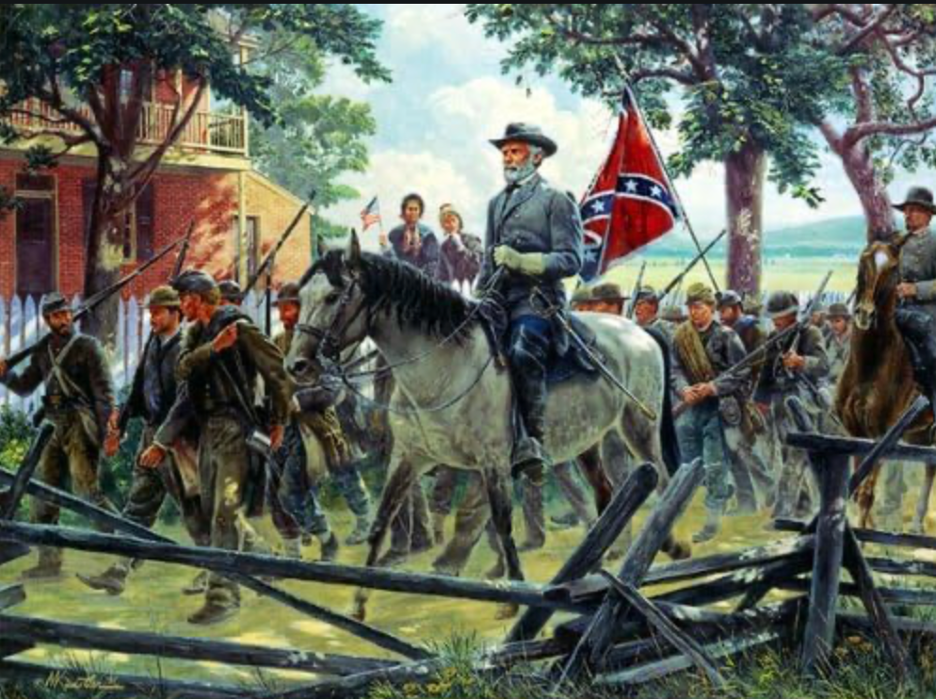
My great-great grandfather was 24 years old in 1861. He was farmer in central Alabama, near Wetumpka, married with a son. He owned no slaves. In May he he and his brother, 18 and unmarried, enlisted in a regiment forming in Montgomery. Union volunteers committed to three-year terms of enlistment. My great great grandfather’s regiment was the first to enlist “for the duration” of the war, vowing to fight until victory or death.
Designated the 8th Alabama Infantry, it travelled by rail to Virginia, formed with four other Alabama regiments into a brigade and incorporated into the army commanded by General Joe Johnston.
The regiment was bloodied at Williamsburg facing General George McClellan and his Army of the Potomac. Johnson established a pattern he would repeat throughout the war: retreat, retreat and retreat again until he found ground he considered suitable for fighting. He backed up to the gates of Richmond and was severely wounded at the battle of Seven Pines on May 31. Jefferson Davis, in one of the very few major personnel decisions that was not an outright disaster for the cause of the South, chose General Robert E. Lee, then his military advisor, as his replacement.
General Lee named his new command as the Army of Northern Virginia. On June 26, he launched his first attack on McClellan at Mechanicsville.
“His name might be Audacity!” a Confederate officer would say; in that, General Lee was head and shoulders above every other officer, Union or Confederate; a contemporary historian says General Lee’s aggressiveness is almost unparalleled in military history. Lee attacked McClellan again on June 27 at Gaines Mill. Both the Alabama Brigade and the Texas Brigade broke McClellan’s lines. It was the Army of Northern Virginia’s first clear victory.
Lee attacked again and again and again. Savage’s Station on June 29, Glendale on June 30, Malvern Hill on July 1. Much did not go as planned in these early battles – Malvern Hill was a particular failure – but McClellan fled the Peninsula, and the new commander, his commanders and their army learned much of one another. With the Peninsula disinfected, August General Lee turned his army west to deal with General John Pope, a boastful officer who’d scored a minor victory in the west, and the pioneer of Lincoln’s “hard war” policies. General Lee was contemptuous of the “miscreant” Pope and disposed of him easily: a flank march by Stonewall Jackson’s “foot cavalry” befuddled the Union general, pinning his army along the line of an unfinished railroad near Manassas while Longsteet launched a crushing attack on the Federal left, led by the Texas Brigade.
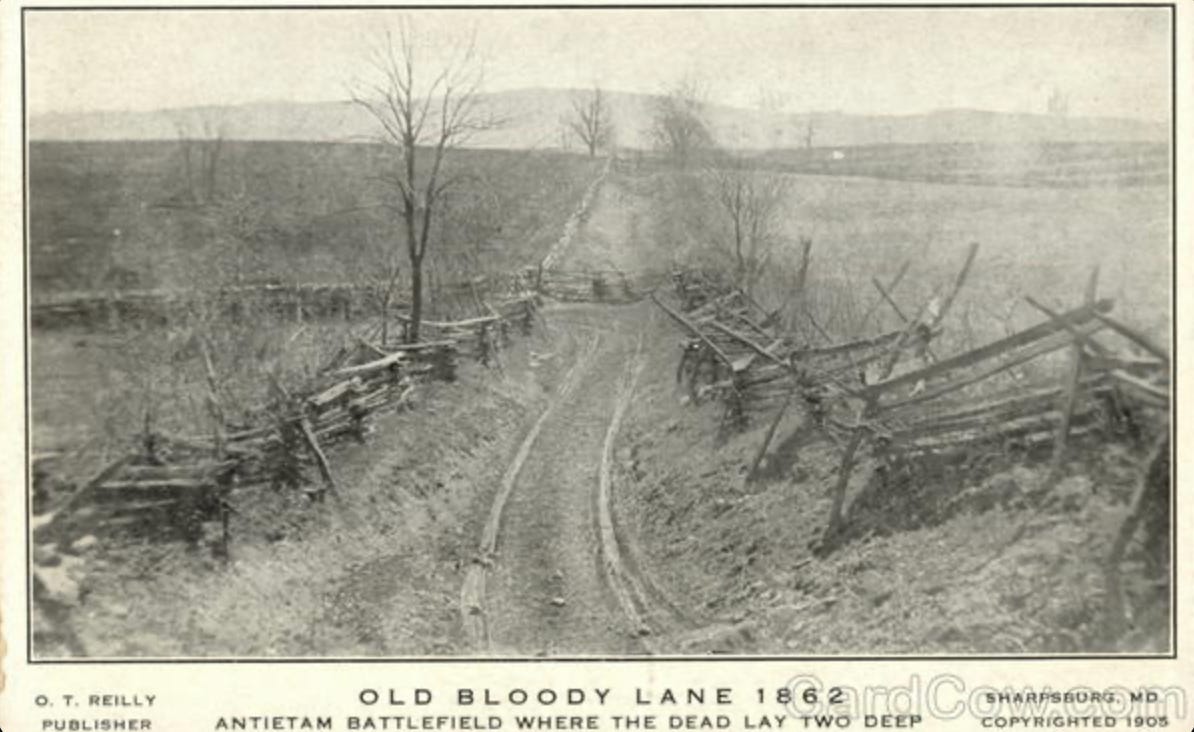
The 8th Alabama and the Alabama Brigade, part of Anderson’s division, stood in reserve at Second Manassas. At Sharpsburg, they were thrown into the Bloody Lane, there to beat back an assault on the center of the Confederate line. The Alabama Brigade’s volleys shredded the Irish Brigade of General Thomas Meagher before being forced to fall back under relentless Federal pressure.
He was granted a one-month furlough after Sharpsburg. On medical grounds, it seems: his record states phthisis, an antiquated term for tuberculosis. My great grandfather was conceived during that visit. He returned to Virginia as the army was preparing to meet their old friends of the Army of the Potomac again, this time under “Fighting Joe” Hooker. He would not see his wife and first-born son again; he would never see his second.
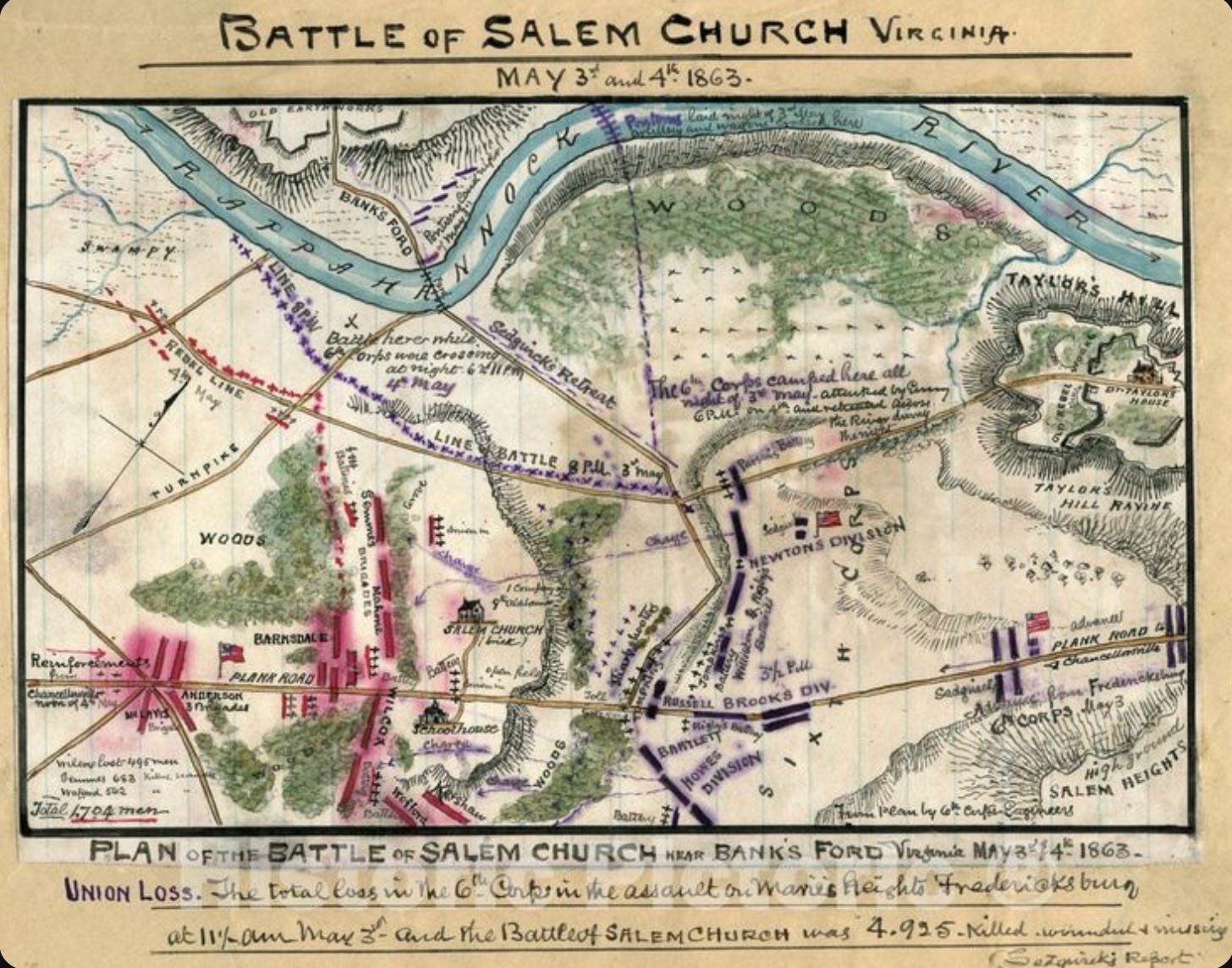
At the Chancellorsville battle, General Lee, outnumbered by more than two to one, divided his army in defiance of all military logic and sent Stonewall Jackson on a march around Hooker’s flank. Jackson’s men fell on the Federal XI Corps, comprised of mostly German immigrants, as they were preparing their supper. Total surprise and a near-complete rout of the Army of the Potomac, which cost the Confederacy the life of the redoutable Stonewall. The 8th Alabama and the Alabama Brigade were assigned the task of stopping General John Sedgwick’s VI Corps, hurrying to Hooker’s aid from Fredericksburg. The brigade and the corps met at Salem Church. Sedgwick was repulsed with heavy losses.
The price of this triumph: General Stonewall Jackson. My great great grandfather’s brother was detailed to carry the report of General Jackson’s death to the authorities in Richmond. Family tradition holds he was confronted by a Union patrol. Armed with only a saber, he arrogantly rejected their calls to surrender, cut his way through them and reached the capitol.
In June, General Lee led the army north into Pennsylvania. They met the Army of the Potomac again, this time under General George Meade, at Gettysburg.
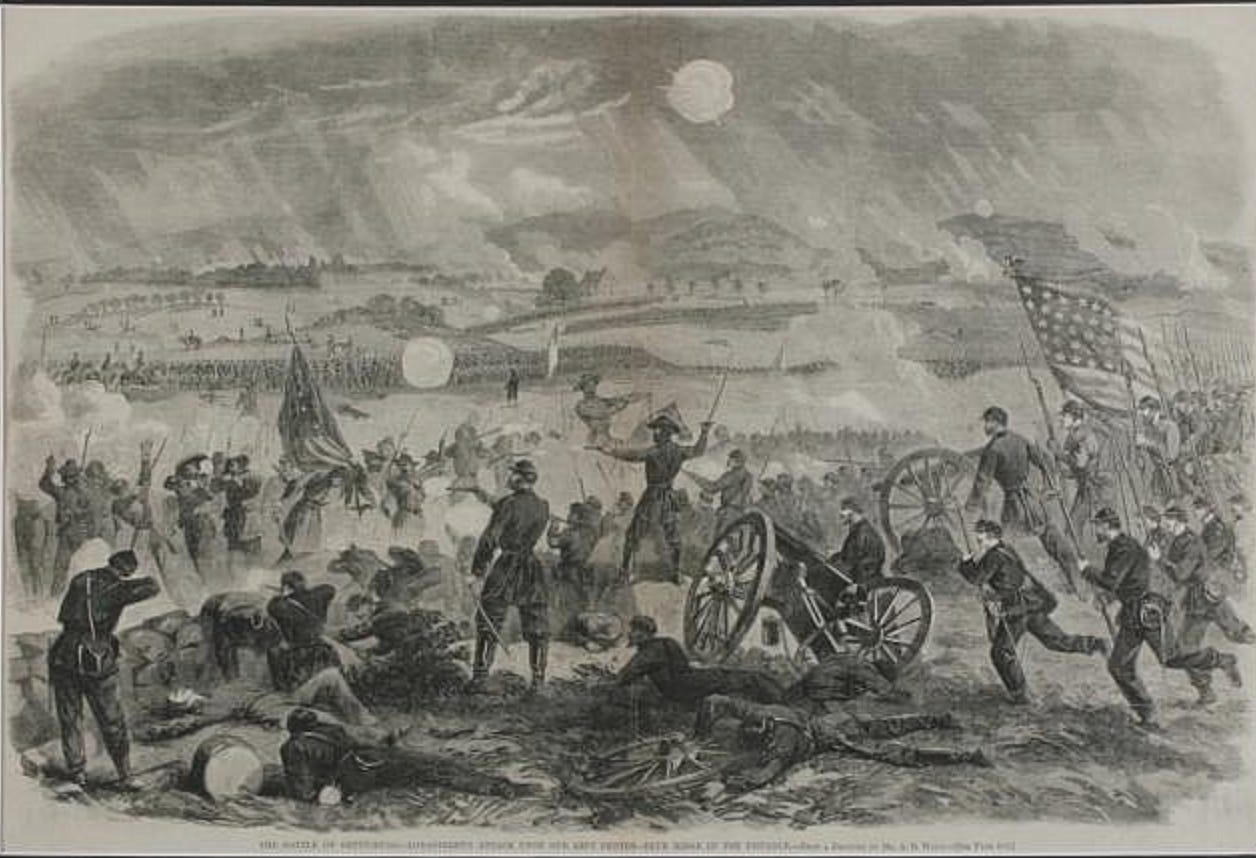
On July 2, the Alabamians assaulted and broke the Union lines along the Emmitsburg Road, seizing six Federal guns and many prisoners, but as so often the case did not have reinforcements sufficient to exploit the breach. Meade flung an untested Minnesota regiment at the Alabamians, who proceeded to slaughter them like so many pigeons. But the Minnesotans’ sacrifice gave Meade time to bring up reserves of his own. The Alabamians were forced to withdraw. Out of 420 men engaged, 266 were killed or wounded.
One of the wounded was my great-great-grandfather’s brother. A Yankee cannonball ripped away his foot. My great great grandfather was captured. I suspect he may have been trying to help his brother.
They would never see each other again.
Yankee stretcher bearers bore his brother to a Union hospital, and the Yankee doctors, to their credit, saved him with the slaughterhouse methods of the past. They sawed off his foot above the ankle, the standard treatment for shattered limbs. Gangrene set in, so they sawed off his calf above the knee. Gangrene persisted, so they took off a chunk of thigh. A shot of whiskey, a bullet to bite, four orderlies hold him down as the surgeon takes up his gore-clotted saw, and just like that: another diseased limb for the pile. Three times he suffered this, and three times he survived. He was exchanged to a hospital in Richmond in 1864 and somehow made it back to Alabama in the autumn of that year.
My great-great grandfather escaped his captors and returned to the Army of Northern Virginia.
In May of 1864 Grant marched 150,000 men over the Rapidan into the murky chaparral of second-growth timber known locally as the Wilderness. Grant, the besieger of Vicksburg, and who claimed credit for the victory at Chattanooga accomplished by the plans of General George Thomas and his Army of the Cumberland, was smugly assured that he and his cronies from the west, who in Pemberton and Bragg faced two of the Confederacy’s most uninspiring generals, would show these paper-collar Eastern soldiers and put a whooping on Bobby Lee.
The veterans of the Army of the Potomac were less sanguine. They camped in the tangled perma-darkness among the shallow graves of men killed by Jackson’s warriors and discounted the new chief’s boozy assurance. I have seen many officers come from the west melt before the battle-fire of the Army of Northern Virginia, a Yankee artillerist said. Robert E. ain’t got many men but the ones he has are mighty fine ones, a Confederate prisoner said. I reckon you’ll learn that before you leave here
Grant would learn, and Army of the Potomac paid for it. As his army rose on the morning of May 5 to escape the twilight gloom of the Wilderness ossuary, Confederates commanded by General Ewell and General Hill appeared in the crepuscular gloom.
The fighting on that day and the next was the most brutal of the war. The Southern soldiers made brilliant use of the ground, firing massed volleys into confused columns, bursting from the gloom with the eerie Rebel Yell. A counterattack by General Hancock’s II Corps was halted by an impetuous charge by the Texas Brigade; a flank attack by Longsteet’s corps, Hancock would say after the war, rolled up his lines like a “wet blanket.”
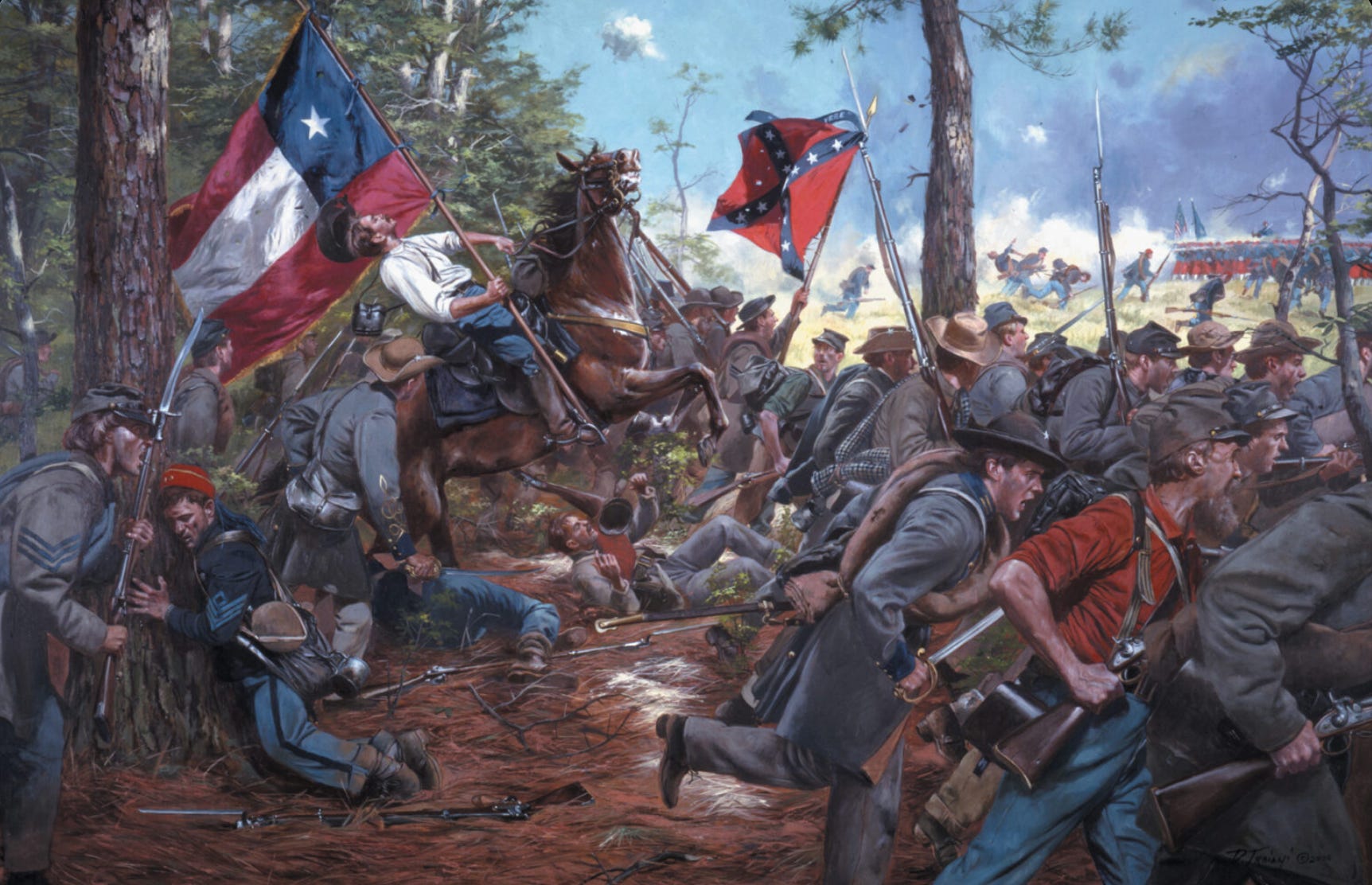
Grant lost over 17,000 men in the Wilderness, in no small part due to his incredibly clumsy troop handling. He spent the battle on a stump near his headquarters, smoking cigars and whittling incessantly. His aide Horace Porter in postwar memoirs painted an inspiring portrait of the “quiet man from Galena” in the Napoleonic mode: carefully weighing every scrap of battlefield intelligence and with calm resolution directing his men to the most vulnerable points of the line. Others, including chief of staff John Rawlins, report that the Great Captain flung himself onto his cot the night of May 7 and sobbed himself to sleep.
We’re told it was a release of the nervous energy accumulated while he sat whistling and smoking on his stump. Whatever the case, the Great Captain rose on May 8, and with that tenacity celebrated as the highest military virtue by his legions of admirers, gathered the remnants of his battered army and pointed them south – not toward the Rapidan bridges, as had all prior commanders: McClellan, Hooker, Burnside. His soldiers, they say, burst into applause.
Perhaps they did. But Grant’s decision showed that the nature of the war had changed. “He fights!” Lincoln once gushed over the former leather-goods salesman. Grant was ready, willing and able to spend the lives of his men by the thousands, the tens of thousands. It did not matter if one thousand, three thousand, five thousand, died in a hopeless assault on Confederate breastworks, their bodies to bloat and rot in the heat of Virginia summer. There were plenty more where they came from. If ten Yankees could fall for every Confederate, Grant had twenty newly-arrived immigrants or conscripts to fill the savaged ranks. General Lee had none. And eventually, the iron law of attrition would prevail.
The 8th Alabama was heavily engaged in the Wilderness; its soldiers fired the volley that cut down General James Wadsworth, a Federal brigadier and said to be the wealthiest man in America. At Spotsylvania Court House the Alabamians were hurled into the nightmare of the Bloody Angle, the most savage fighting in the history of the war. It was under fire every day as Grant, shrugging off the over 18,000 Federal casualties at Spotsylvania, continued his remorseless advance toward Richmond, dragooning musicians and heavy artillerymen from the Washington garrison to make up his losses. The 8th Alabama fought at Cold Harbor, where some 7000 Federals fell in an attack so pointless and ill-conceived that even the Great Captain regretted ordering it.
He had been ordered to destroy the Army of Northern Virginia, and he had failed.
But his tenacity remained. He managed to cross the James River undetected. But his troops were shaky, unwilling to make frontal charges on Confederate positions. The Federals approached the Petersburg defenses, then manned by only the old men and boys of the garrison, with utmost caution. They were easily driven away in a counterattack. His one opportunity to sneak into Richmond by the back door had failed. It was back to siege warfare for the Union.
The Alabamians were then part of the division of William Mahone, a railroad engineer who knew the ground around Petersburg intimately. Mahone’s men beat back a Union attempt to sever the Weldon Railroad in June. At the Battle of the Crater, which Grant would call “the saddest affair I have witnessed in the war,” Mahone’s division spearheaded the Confederate counterattack.
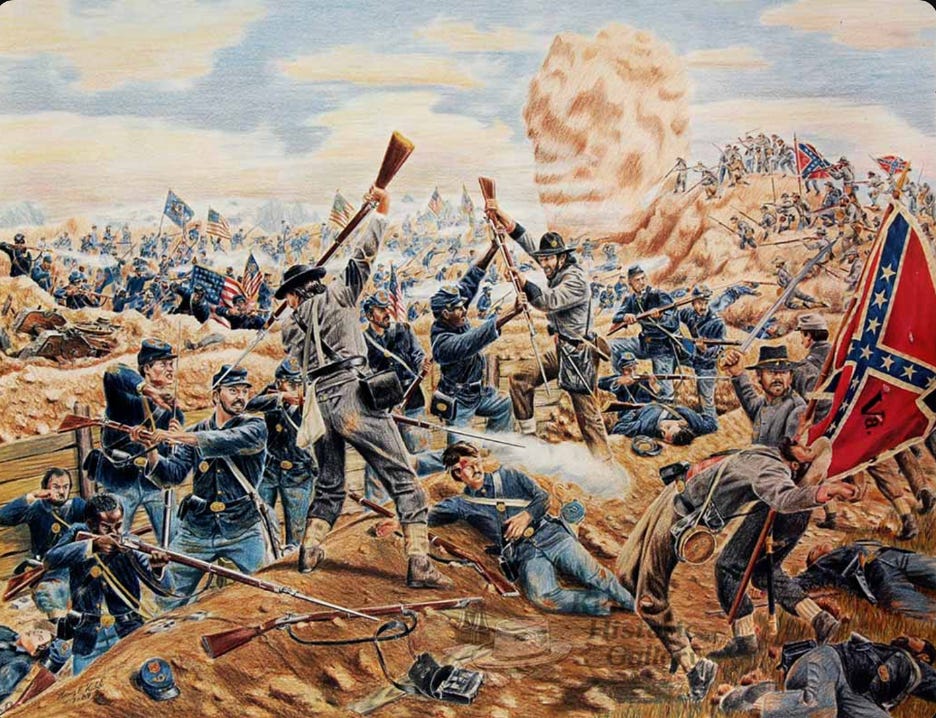
The Yankees made another lunge at the Weldon Railroad in August. Mahone’s men smashed a Union division, taking 2500 prisoners. Mahone’s division remained intact during the retreat from Richmond. At Appomattox, the remnant of the 8th Alabama “denied the first rumors of surrender and indignantly tore their battle-flag into shreds to retain as mementos.” Of the 1377 men on the regiment’s rolls, 16 officers and 153 men surrendered.
My great great grandfather was not among them.
He died in Howard’s Grove Hospital on January 20, 1864, one day after the 57th birthday of General Lee. He is buried in the Confederate cemetery in Petersburg. The Virginia legislature, eager to show its progressive bona fides, took away monies allocated for its upkeep.
